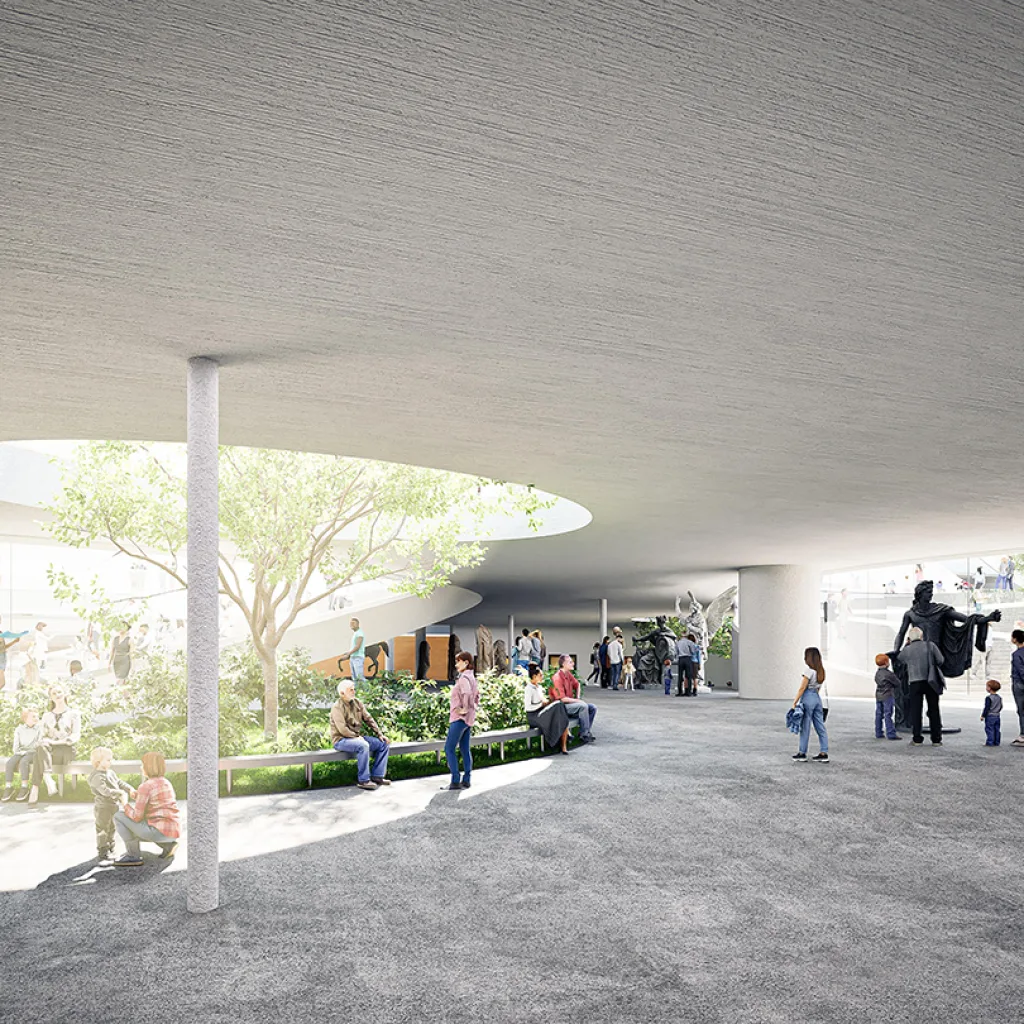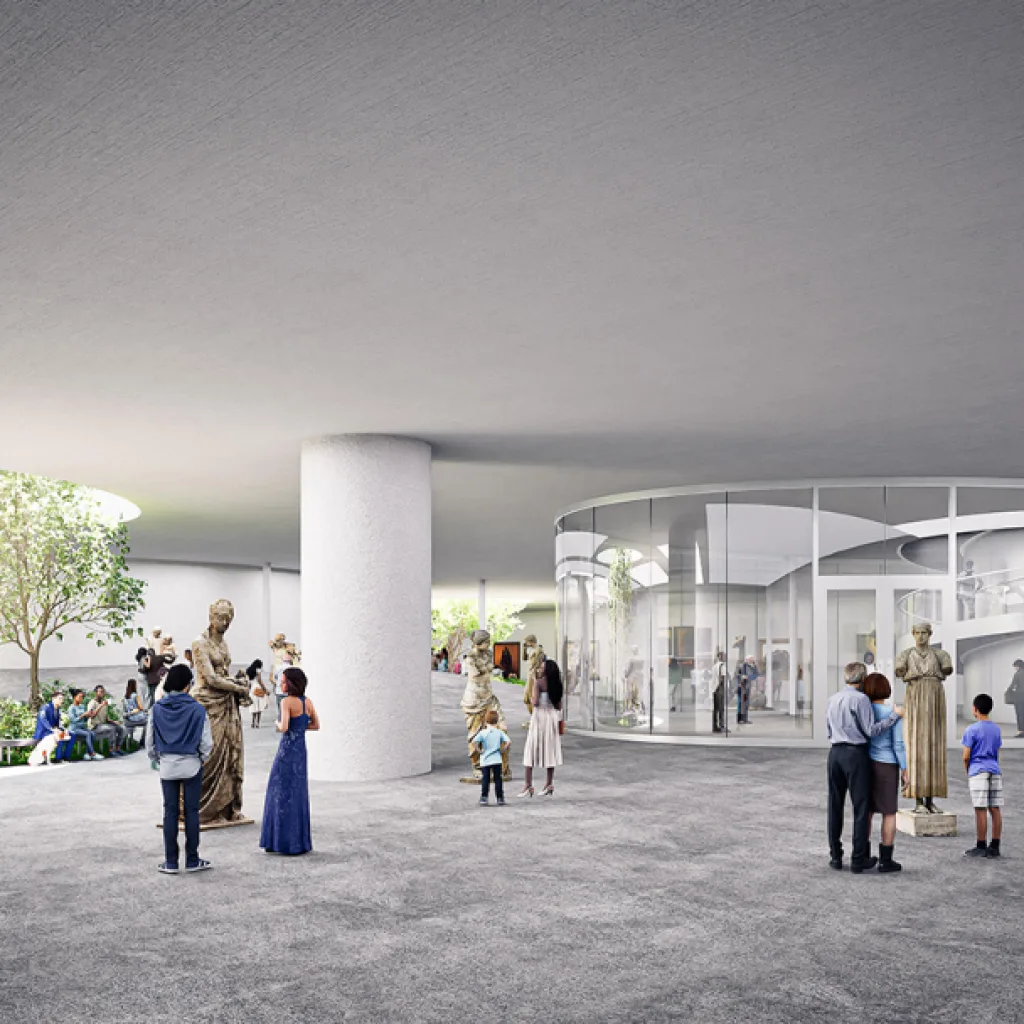
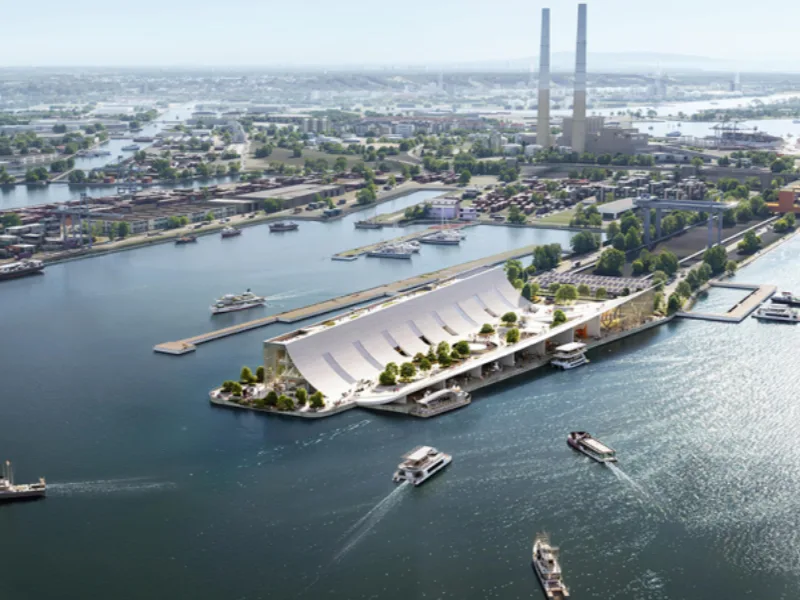
Port Harcourt Museum in Le Havre, France, with its extended arched roof / LYT-X Studio
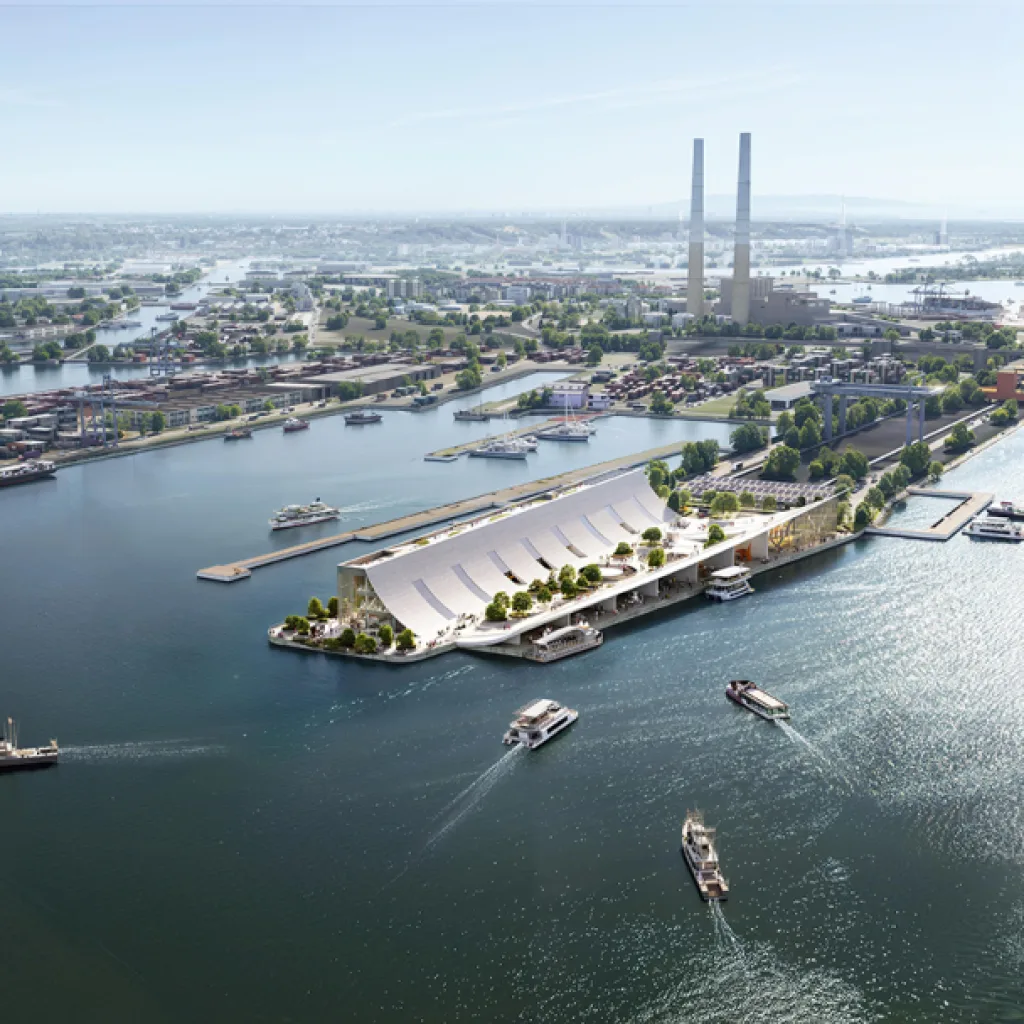
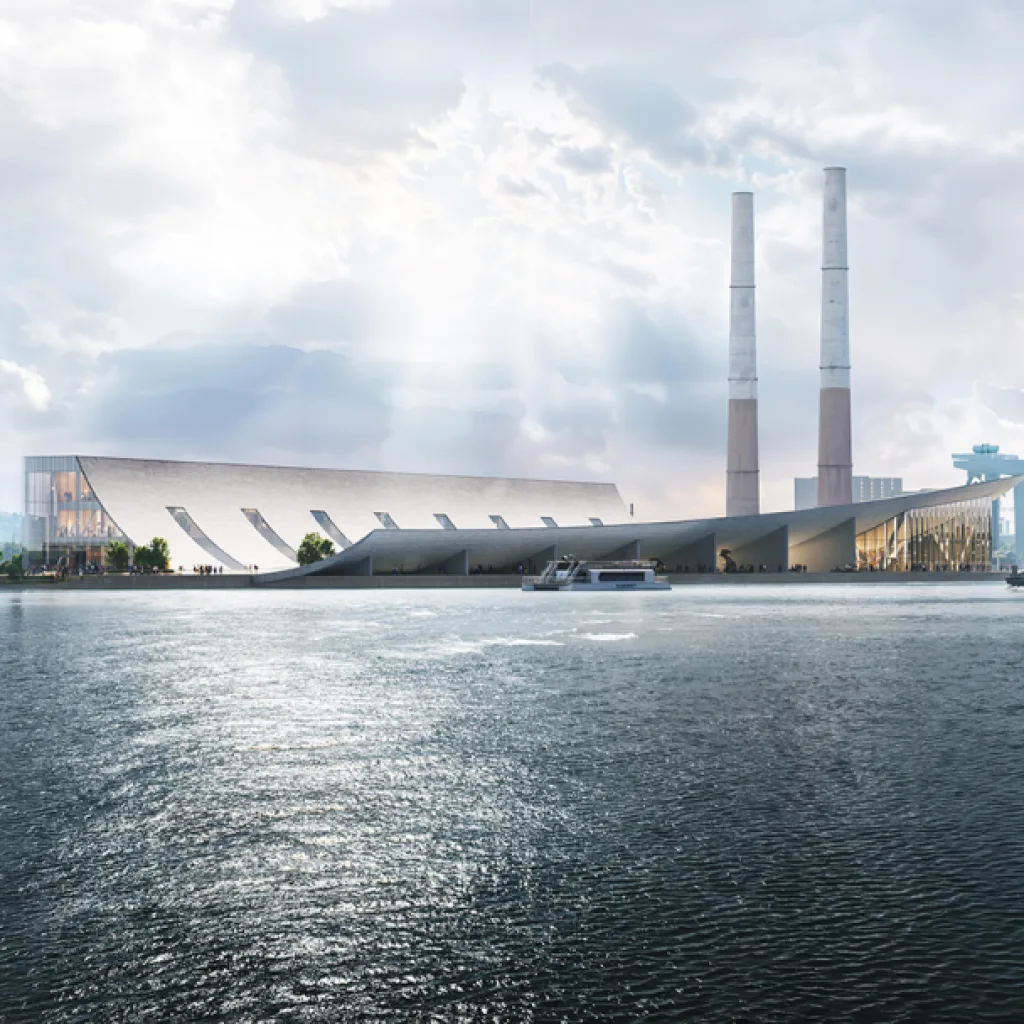
The Brise-Vent Havre Harbor Museum is a cultural project located along the historic waterfront of Le Havre, France. The project proposes the adaptive reuse of an existing industrial harbor structure, repositioning it as a public cultural facility integrated into the city’s maritime and urban context. Rather than treating the site as a preserved artifact, the project approaches the existing building as a spatial and infrastructural resource capable of accommodating contemporary cultural use and public access.
The site occupies a former port area that once played a central role in industrial and maritime operations. As port activities evolved, the structure gradually lost its original function and became disconnected from daily urban life. The project responds by retaining the existing building as the primary historical layer while introducing new architectural elements that extend its capacity for public use. This strategy allows the historic fabric and contemporary intervention to remain legible as distinct yet interrelated components within a single architectural framework.
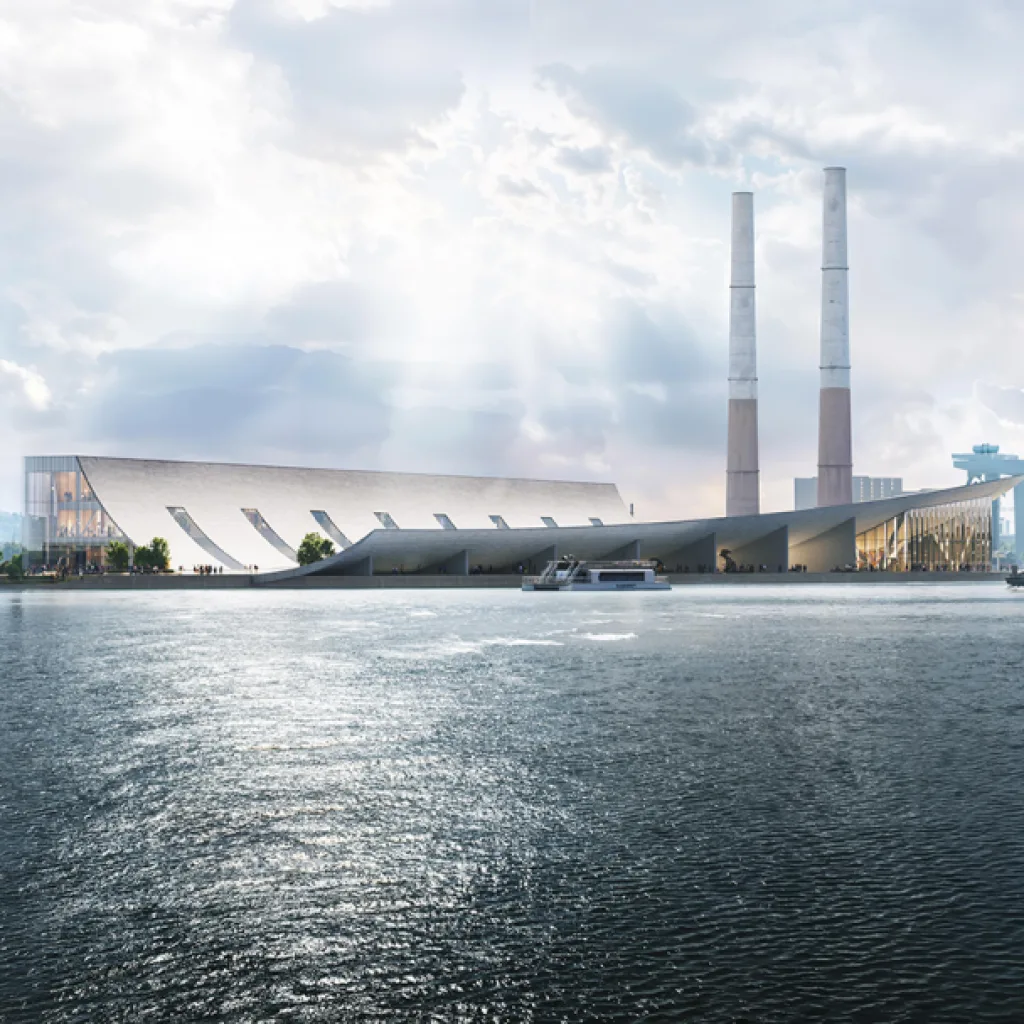
The architectural organization establishes a continuous spatial sequence connecting the city, the waterfront, and the harbor. Public circulation routes are arranged to allow movement across and through the site, rather than concentrating activity within a single enclosed volume. In this configuration, the museum functions as part of the broader waterfront network, supporting both programmed cultural activities and informal public use as part of everyday urban life.
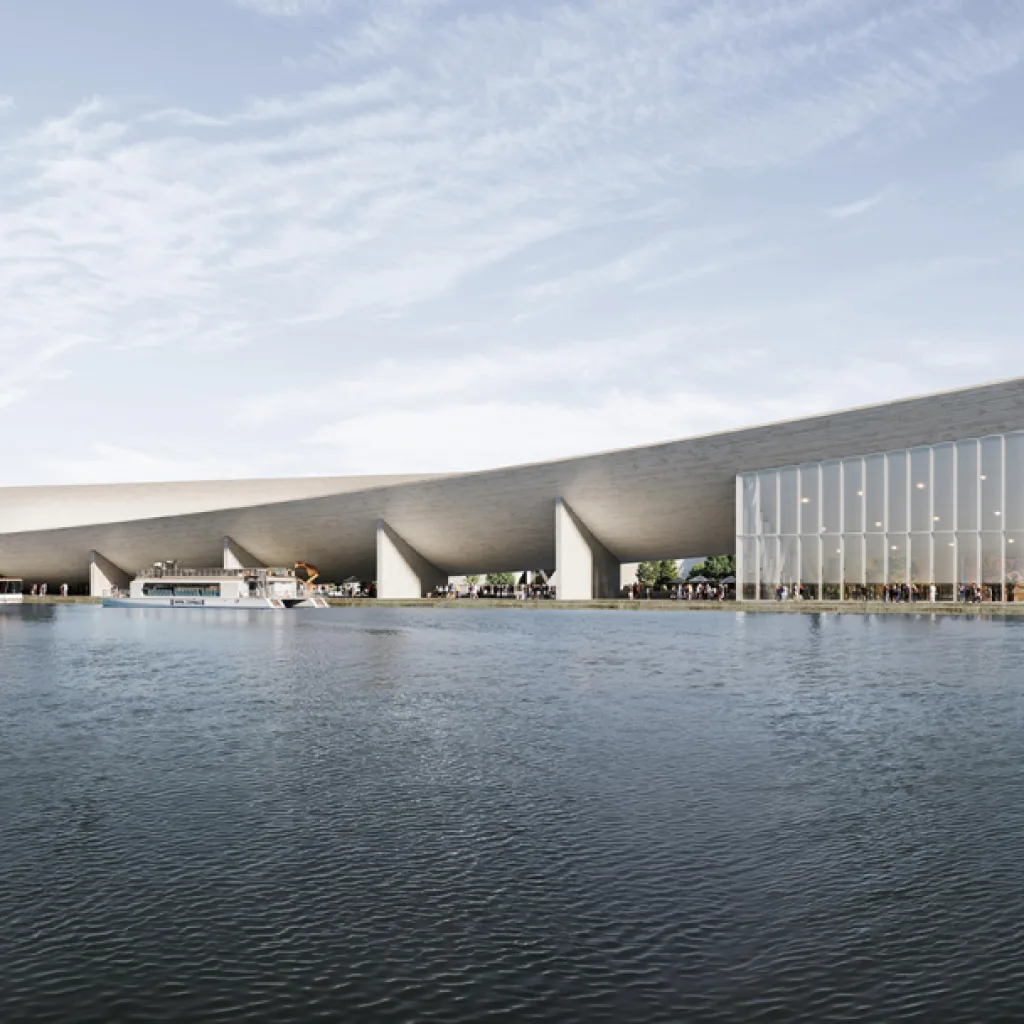
A defining architectural element is the extension of the existing curved roof into a continuous canopy along the waterfront edge. This canopy structures circulation, provides shaded outdoor areas, and establishes a transition between urban pathways and harbor activity. Beneath the extended roof, a series of semi-open public spaces and a sheltered courtyard are introduced, allowing access from both the city promenade and the water. The museum is positioned as a connective public environment rather than a destination separated from its surroundings. Public accessibility is treated as a central design parameter throughout the project. The courtyard remains accessible beyond museum operating hours, enabling the site to function as an open civic space. Thresholds between interior and exterior areas are defined through spatial continuity rather than visual transparency alone. Exhibition halls, performance spaces, and public circulation zones are arranged to accommodate both curated cultural programs and informal daily use, allowing cultural activity to intersect with the rhythms of the city.
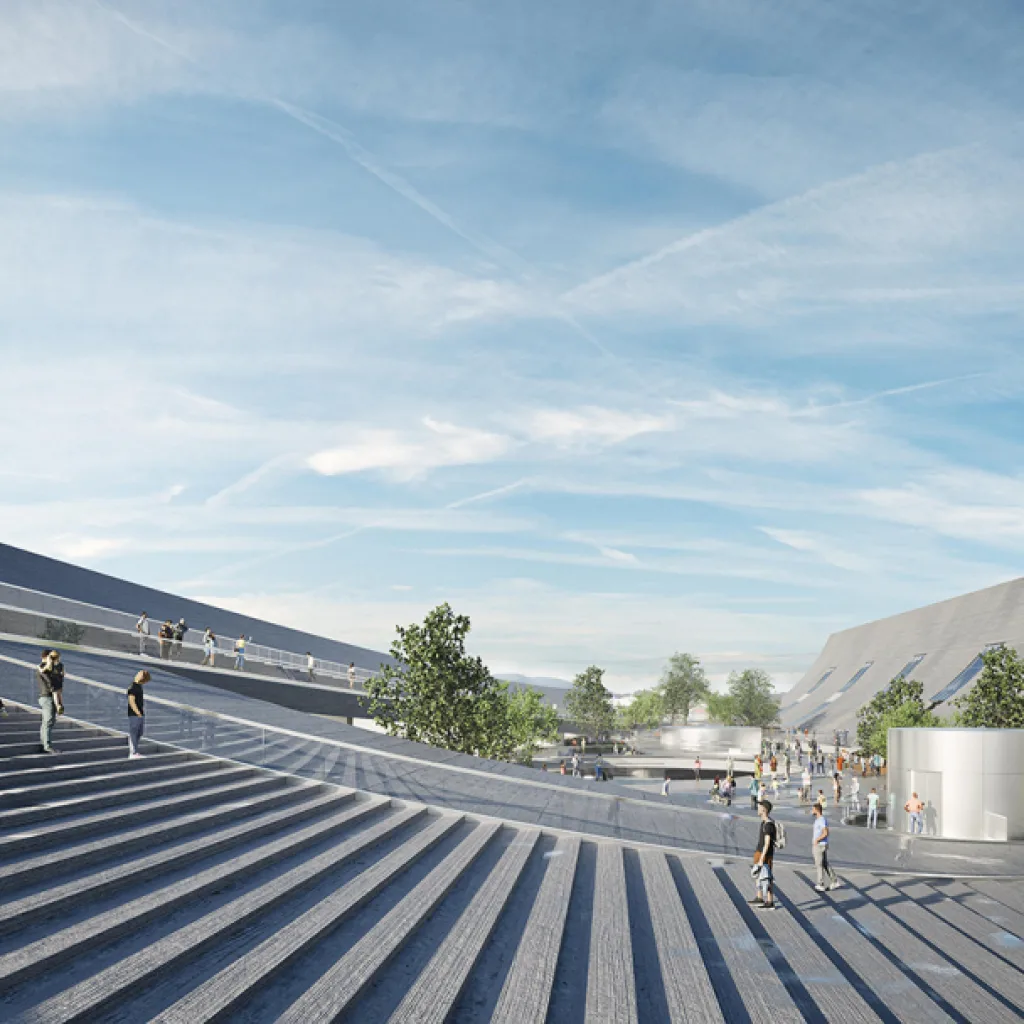
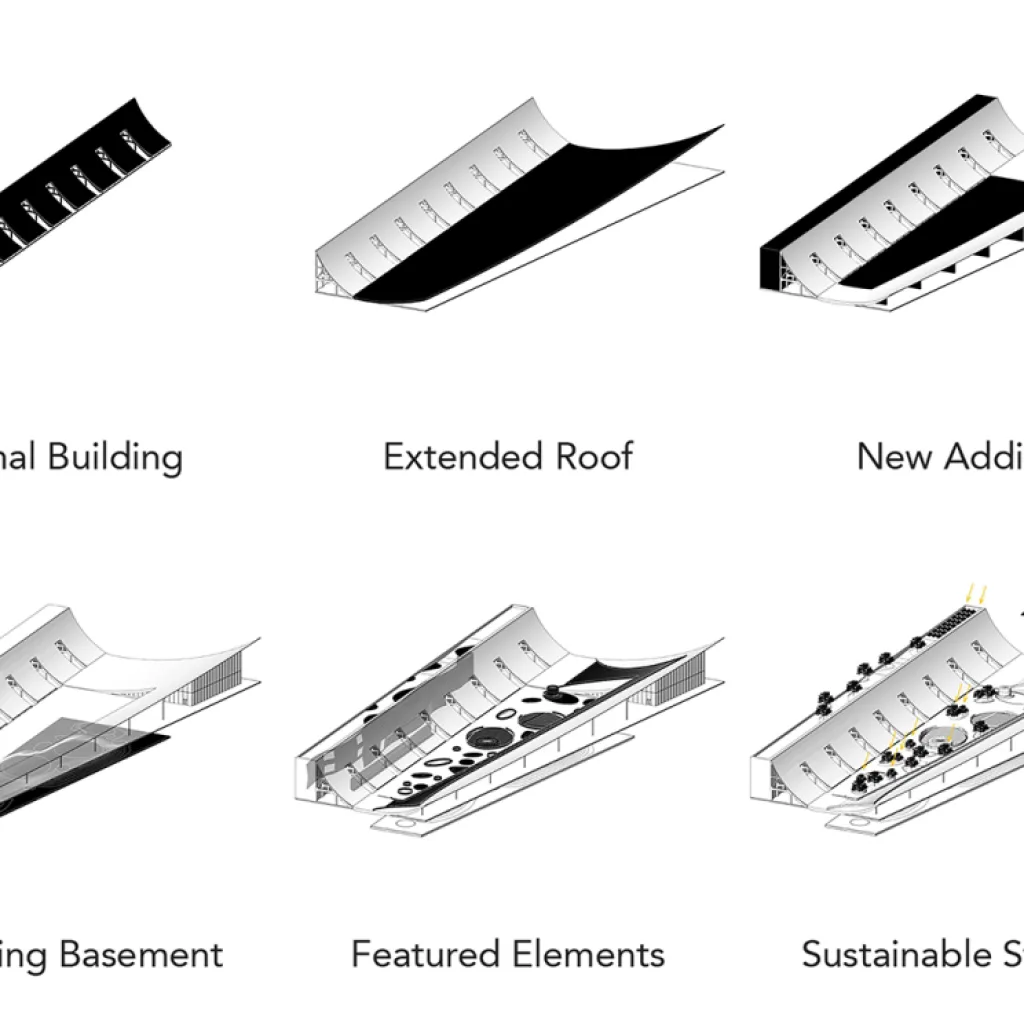
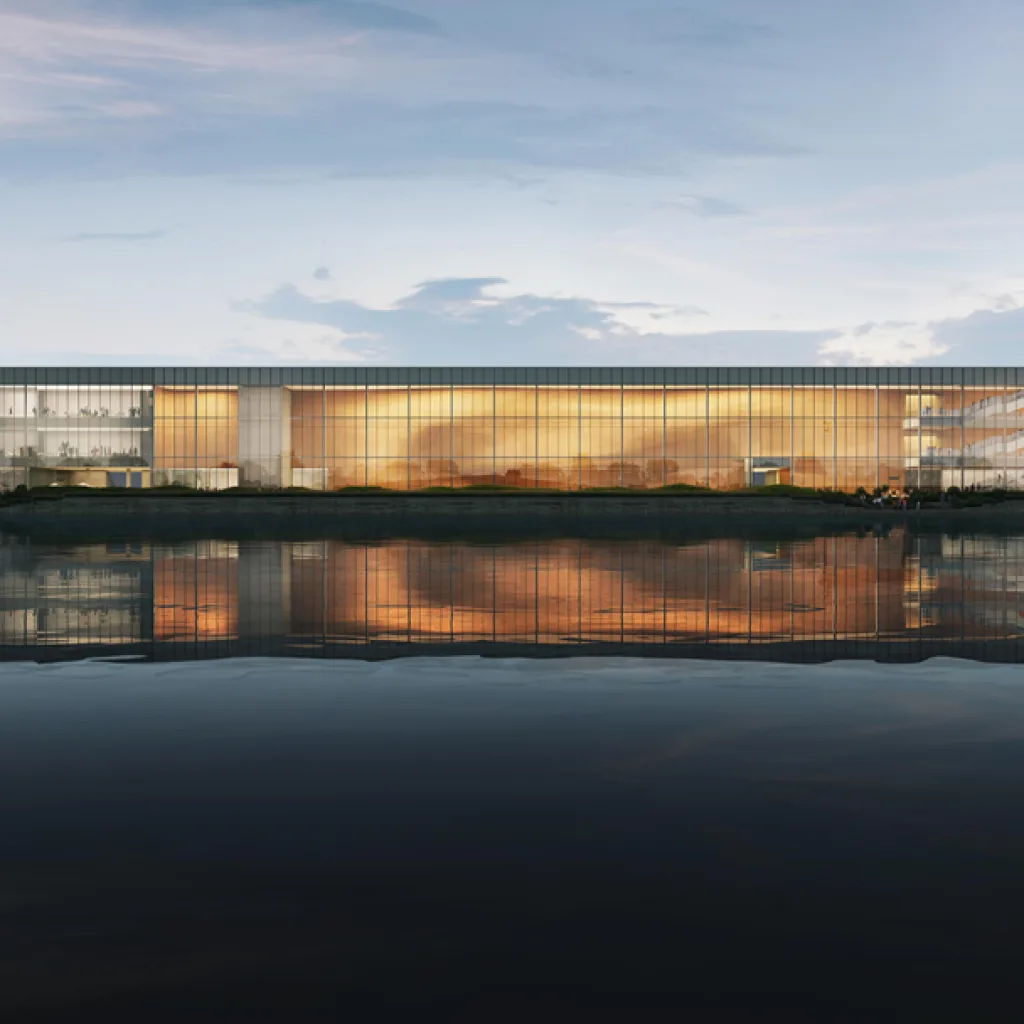
The program includes permanent and temporary exhibition halls, a performance hall, flexible event and cultural spaces, and outdoor public areas connected to the waterfront dock. This mix supports a range of cultural formats while maintaining adaptability over time. Interior spaces are organized to provide clear circulation and orientation, with views toward the harbor reinforcing the relationship between the building and its maritime context.
Throughout the project’s development, a defined architectural position addressing the relationship between historic fabric, public accessibility, and long-term urban use was established within LYT-X Studio. Within this framework, Founder Dingdong Tang contributed to structuring these relationships at the project level. The position was developed through collaboration with co-founders Zehui Li and Haisheng Xu and translated into spatial organization, circulation systems, and environmental strategies supporting contemporary cultural use within the existing infrastructure.
Environmental considerations are integrated through the reuse of the existing structure and the reduction of new construction. The extended roof canopy provides passive shading and contributes to moderated microclimatic conditions along the waterfront. Courtyards and roof openings introduce natural light into interior spaces, while ventilation strategies take advantage of coastal air movement. These measures support functional performance while aligning with long-term operational considerations.