
The Architectural Poetry and Modern Expression of Thailand’s Aluminum Grotto
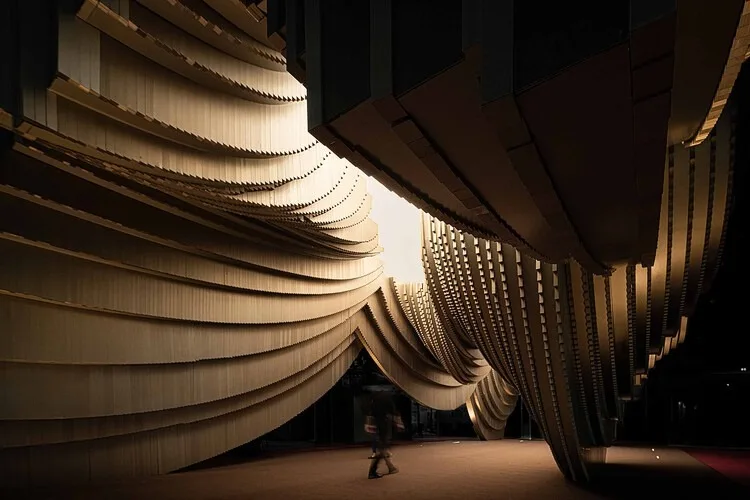
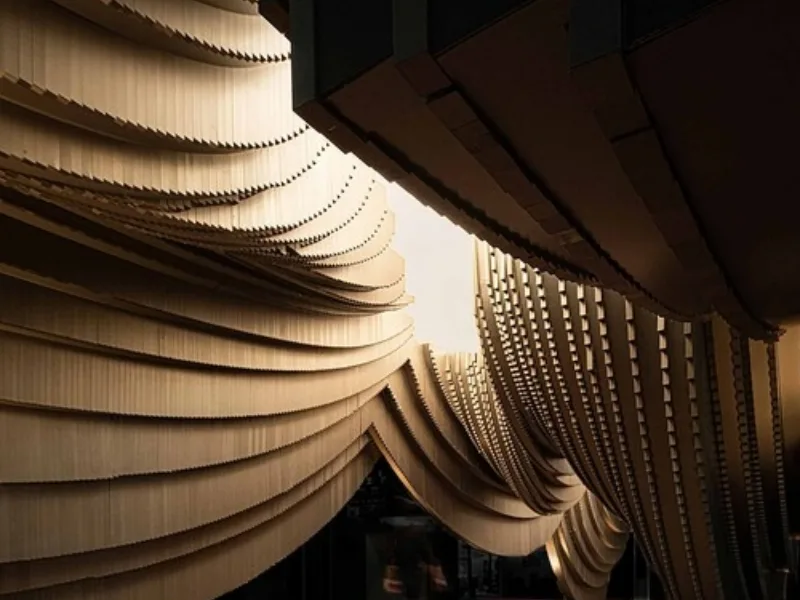
In the bustling urban fabric of Bangkok, a structure built by hand from hundreds of thousands of aluminum strips, with its flowing curves and delicate texture, breaks down the barrier between industrial materials and traditional culture. This is Thailand’s Aluminum Grotto. A temporary public space created for the 90th anniversary of the Association of Siamese Architects, the building was designed by HAS Design and Research. In the collision between industry and tradition, it redefines people’s understanding of aluminum architecture and composes a unique architectural narrative about materials, culture, and public space. It is not only a concrete manifestation of Thailand’s strength in the aluminum industry but also an exquisite work where architects use modern design language to communicate with local traditions and respond to urban needs.
The birth of the Aluminum Grotto carries a clear mission and humanistic aspirations. Initiated by Thailand’s leading aluminum company S-ONE Group and KIN, the project aimed to provide a free, public space for rest, communication, learning, art exchanges, and non-profit lectures amid the busy exhibition fair—allowing architecture to return to its public nature and stay away from commercial noise. More importantly, architects Jenchieh Hung and Kulthida Songkittipakdee intended to showcase Thailand’s status as a major metal manufacturing and exporting country in Southeast Asia. They also sought to address the urban reality: Bangkok’s per capita green space is only 6.99 square meters, far below the World Health Organization’s recommended standard. In the high-density exhibition environment, the building creates an “urban oasis” that combines natural atmosphere and humanistic warmth.
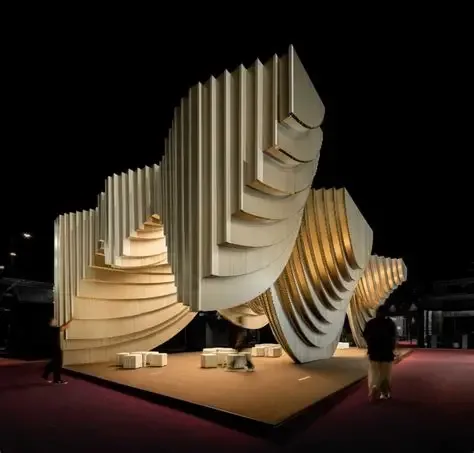
In terms of design concept, the Aluminum Grotto achieves a triple integration of nature, tradition, and modernity, with every detail hiding the architects’ ingenuity. Rejecting the regular forms of traditional architecture, the design takes the “natural valley and cave” as its inspiration. It defines the space with flowing curved aluminum surfaces, recreating the living scene where Thais have relied on natural mountains and rivers for hundreds of years. In the midst of a busy fair, visitors can instantly escape the noise and feel the tranquility and inclusiveness of nature. More meaningfully, the elevated shape of the building leaves an open, elevated space at the bottom, creating a “grey space” that blurs the boundary between indoor and outdoor, attracting people to stop and communicate. This cleverly echoes the multi-functional “Tai toon” space of traditional Thai stilt houses, integrating local traditional elements into a modern architectural form seamlessly.
Aluminum, as the core material of the building, fully demonstrates its unique advantages and modern value. With a density only one-third that of steel, aluminum is lightweight, highly corrosion-resistant, recyclable, and easy to process and construct. The use of a large number of prefabricated aluminum components not only speeds up the construction cycle but also reduces on-site waste, reflecting the concept of low-carbon and sustainable architecture. Unlike rigid and heavy traditional building materials, aluminum’s ductility allows architects to create smooth, dynamic curves that mimic the natural undulations of mountains and water. The light texture of aluminum also softens the industrial sense of the material, making the entire building appear transparent and lively, as if it grows naturally from the land.
As a temporary public building, the Aluminum Grotto also has profound social significance. It provides a quiet and comfortable gathering place for people in a fast-paced city, encouraging communication, sharing, and close contact with nature. At the same time, it uses cutting-edge aluminum structure technology to present traditional Thai culture in a modern way, allowing traditional aesthetics to gain new vitality in contemporary architecture. It proves that modern industrial materials are not opposed to tradition but can be integrated with it to create spaces that are both forward-looking and full of cultural heritage.
The Aluminum Grotto is more than just an architectural work; it is a dialogue between material and culture, tradition and modernity. With aluminum as the medium, it builds a bridge between industrial civilization and traditional culture, between urban hustle and natural tranquility. In an era of pursuing sustainability and innovation, this building shows the world a new possibility: architecture can be light, sustainable, full of artistic conception, and deeply rooted in local culture. It is a successful practice of modern aluminum structure architecture, and also a poetic interpretation of how to inherit tradition in the progress of the times.